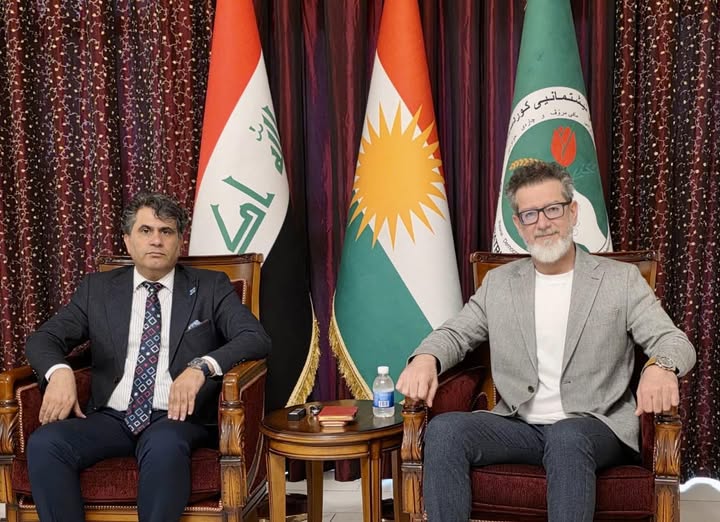
During a meeting between the General Coordinator of Masarat Foundation, Dr. Saad Salloum, and the Special Representative of the United Nations Secretary-General for Iraq, Dr. Mohamed Al Hassan, attention was drawn to the eleventh anniversary of the publication of the Blue Edition of the book “Minorities in Iraq,” prepared by Masarat Foundation in partnership with the United Nations Assistance Mission for Iraq (UNAMI). Since its release, the book has become a key reference for understanding the reality of religious and ethnic diversity in the country, particularly in the aftermath of ISIS’s invasion of Nineveh Governorate in 2014.
The book, which is considered a foundational reference in minority studies, marked a turning point in introducing Iraq’s ethnic and religious components, including Yazidis, Christians, Shabak, Kaka’i, Turkmen, and others. It also contributed to establishing a knowledge framework for understanding the challenges faced by these communities.
With the escalation of crimes committed by ISIS against these groups, the book gained added significance, as it provided researchers and decision-makers with documented material that helped explain the transformations witnessed in the areas of the Nineveh Plain, Sinjar, and Tal Afar. Many research and human rights institutions relied on it to monitor patterns of violations and analyze protection policies.
The book also played a prominent role in drawing the attention of local and international media at the time to minorities in Iraq, contributing to raising global awareness and pushing the issue of smaller communities to the forefront of human rights and political discussions.
Eleven years after the publication of its Blue Edition, “Minorities in Iraq” remains an indispensable reference for understanding the depth of Iraqi pluralism and a key milestone in the ongoing effort to defend the rights of peoples and communities that have, for centuries, formed an integral part of the fabric of Iraqi society.