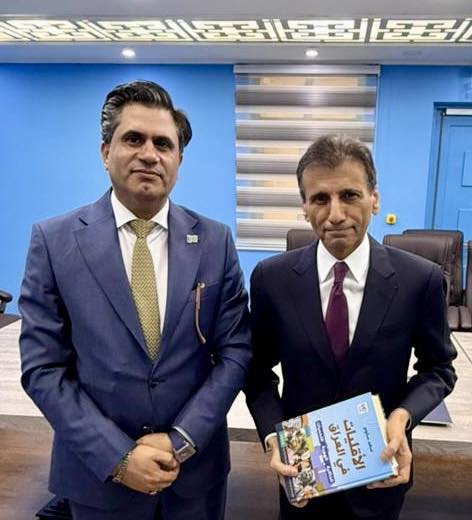
Masarat Foundation participated in a workshop organized by the National Security Advisory on transitional justice in Sinjar, with the participation of governmental and international institutions.
The workshop, held on Thursday, 27 November 2025, at the headquarters of the Advisory’s Center of Excellence, was titled “Transitional Justice in Iraq: Challenges and Prospects for Moving Forward in Sinjar,” within the framework of following up on strategic priority files of the state.
The workshop, chaired by His Excellency Advisor Mr. Saeed Al-Jiyashi, witnessed broad participation from representatives of the Presidency of the Republic, the Office of the Prime Minister, the Council of Representatives, the Supreme Judicial Council, the State Council, the Nineveh Provincial Council, the Ministry of Labor and Social Affairs / Survivors Directorate, the Martyrs Foundation, the Ministry of Justice, the Center of Excellence, Beit Al-Taayush, Masarat Foundation, and the Joint Operations Command.
Through a paper presented by the General Coordinator of the Foundation, Masarat Foundation offered a comprehensive vision for the path of transitional justice in Sinjar, reviewing the current situation, institutional and legislative challenges, and available options to enhance accountability and reparations, while emphasizing the necessity of adopting an integrated roadmap based on international standards and taking into account the specificities of the Yazidi community.
The session included an in-depth discussion of the obstacles facing the activation of transitional justice programs and ways to overcome them, in addition to official interventions by representatives of the three presidencies, leaders of the Yazidi community, and officials from Nineveh, all of which focused on the importance of accelerating steps to ensure the return of stability to Sinjar.
The workshop concluded with the submission of a set of practical recommendations to the relevant authorities, aimed at supporting national efforts to establish justice, ensure fairness for victims, and enhance societal stability.